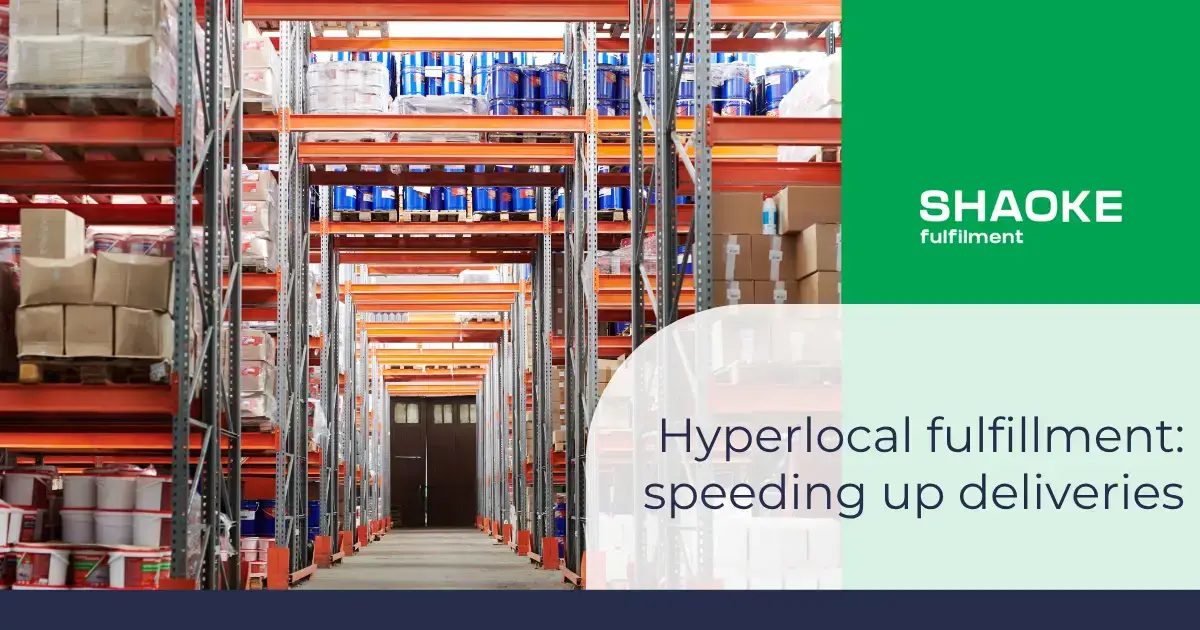
In today’s fast-paced world, speed is king, especially in e-commerce. Consumers demand quicker delivery times, and businesses are turning to hyperlocal fulfilment as the solution. This model relies on small-scale, strategically placed warehouses within urban areas to speed up deliveries. By storing products closer to customers, companies can reduce delivery times from days to just hours, providing a competitive edge in a crowded market.
Hyperlocal fulfilment works by establishing micro-warehouses in key areas within cities, allowing products to be picked and shipped from locations closer to the customer. This drastically reduces last-mile delivery times, which traditionally account for a significant portion of shipping costs. According to a report from McKinsey, the last mile makes up about 53% of total delivery costs. By leveraging micro-warehouses, companies can reduce these costs while offering faster service. Amazon has already begun testing this model with its “Amazon Hub” and is seeing promising results.
The impact of hyperlocal fulfilment on urban logistics is profound. For instance, a study from the University of California found that micro-fulfilment centers could reduce vehicle miles traveled by up to 20%, leading to lower emissions and less congestion. Additionally, with increasing urbanization and the rise of e-commerce, this model is becoming essential. The number of people living in cities is expected to reach 68% of the global population by 2050, meaning the demand for fast, localized deliveries will only grow.
Not just a tool for improving efficiency, hyperlocal fulfilment also contributes to customer satisfaction. A survey by Capgemini found that 61% of consumers are more likely to choose a retailer offering same-day or next-day delivery. Companies like Walmart and Target have implemented this strategy, significantly improving their delivery performance and customer loyalty. Smaller players are also capitalizing on this trend, especially in industries like food delivery and fashion, where speed is paramount.
In addition to improving speed and efficiency, hyperlocal fulfilment offers flexibility in how businesses approach delivery. With the ability to scale and adapt to different customer needs, businesses can experiment with different delivery methods, such as crowd-sourced delivery services or partnerships with local courier companies. This flexibility not only enhances delivery speed but also provides businesses with opportunities to reduce operational costs. For instance, some retailers have begun utilizing local delivery drivers using apps to fulfil orders, allowing for faster delivery times without the need for large fleet investments. This adaptability is crucial as companies strive to balance fast delivery with cost-effectiveness, particularly in competitive markets.
Looking forward, hyperlocal fulfilment will continue to evolve with technology. The rise of automation, drones, and AI-powered systems will further streamline operations, making it possible to deliver products even faster and with fewer resources. As more companies adopt this model, the logistics landscape will shift, creating a more efficient, customer-centric future. In the end, hyperlocal fulfilment is not just about faster deliveries—it’s about meeting the demands of an increasingly impatient and convenience-driven consumer base.
Sources
McKinsey & Company, “The Future of E-Commerce and Logistics: A Study on Last-Mile Delivery”
University of California, “Urban Logistics and Micro-Fulfilment Centers”
Capgemini, “The Impact of Same-Day Delivery on Consumer Behavior”